End The Syndemic TN
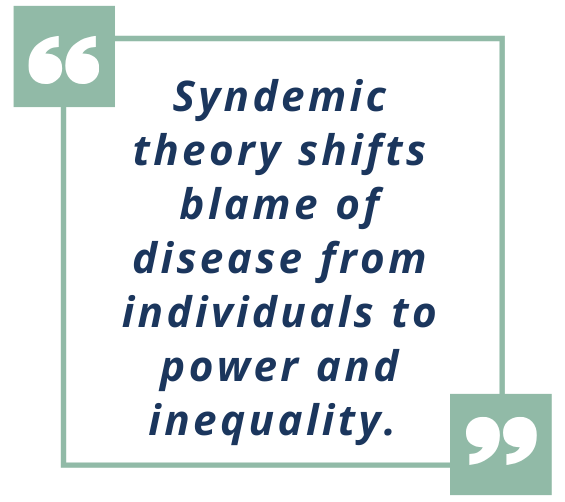
In Tennessee, many of the same people and communities are disproportionately impacted by HIV, sexually transmitted infections, substance use misuse, and viral hepatitis. Overlapping epidemics like these that have common underpinning social determinants of health driving them are called a syndemic.
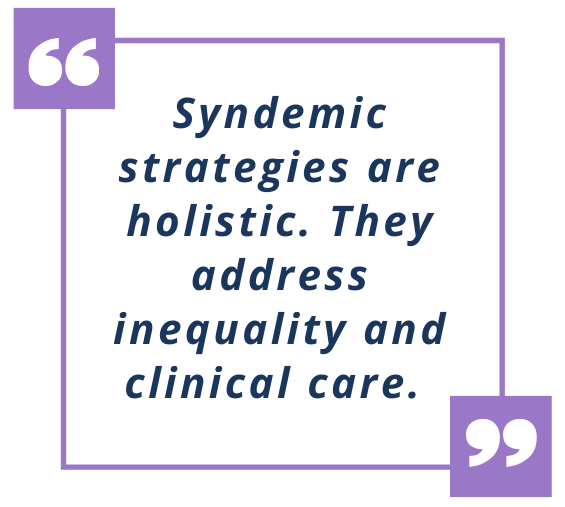
End the Syndemic Tennessee, also known as ETS, is a movement to address the HIV, sexually transmitted infections, substance use disorder, and viral hepatitis syndemic in Tennessee through thoughtful and community-informed programing. To do this, ETS held over 80 community planning meetings and conducted a Statewide Syndemic Needs Assessment to identify community priorities, gaps in services, and strategies of interest.
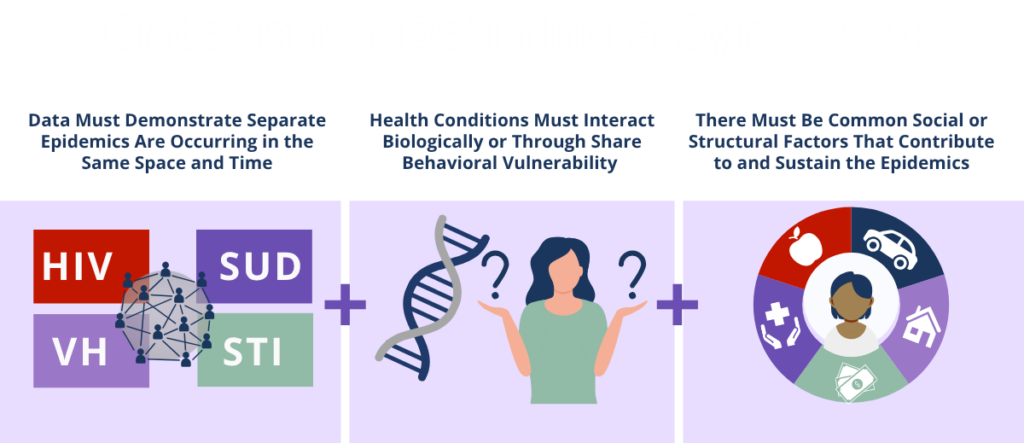
To be considered a syndemic three criteria need to be met:
(1) Data has to demonstrate separate epidemics are actually occurring; (2) The included health conditions interact through behavior or biology to increase overall health burden; and (3)There must be common social factors contribute to and sustain the epidemics.
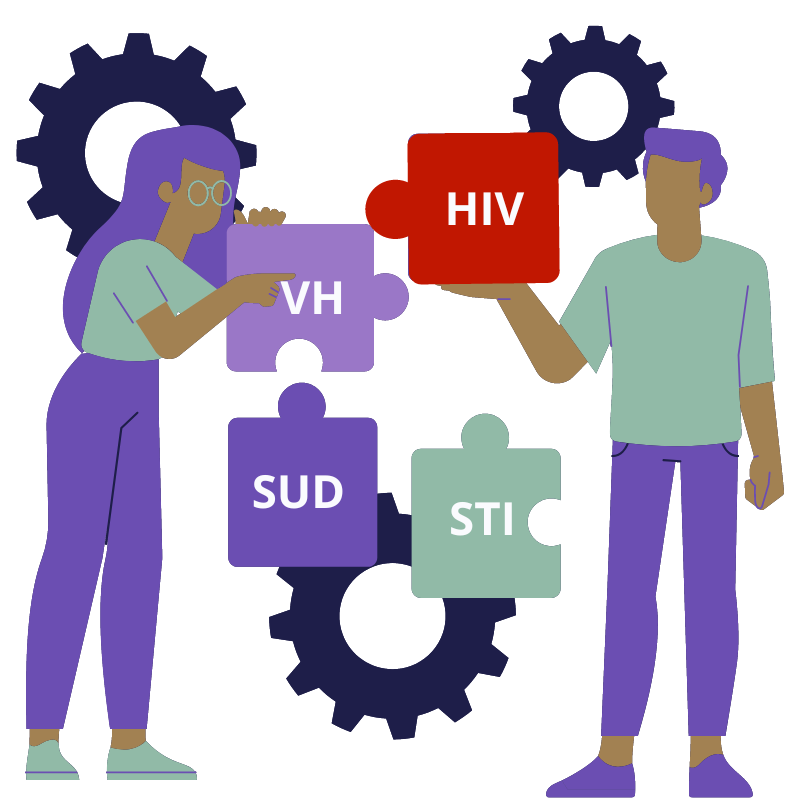
Using this criteria the health conditions included in End the Syndemic Tennessee are: HIV, sexually transmitted infections (STI), substance use disorder (SUD), and viral hepatitis (VH).
After the HIV and hepatitis C outbreak associated with injection drug use in Scott County, Indiana, the CDC conducted a national analysis to understand what other counties in the United States were vulnerable to this sort of incident. Their assessment identified 220 counties in the U.S. that were most vulnerable, and 41 of those 220 counties are in Tennessee.
When TDH conducted their own vulnerability assessment using more recent data and local indicators they found even more widespread vulnerability. Every single county in Tennessee was vulnerable to this sort of outbreak to some degree.
The HIV and HCV outbreak vulnerability assessment alongside epidemiology trends in Tennessee made it clear a new and integrated approach to addressing HIV, sexually transmitted infections, substance use disorder, and viral hepatitis epidemics was necessary. Explore the data trends below that support a syndemic approach in Tennessee.
Community

Program directors and key epidemiologists across the Tennessee Department of Health (TDH) and the Tennessee Department of Mental Health and Substance Abuse Services (TDMHSAS) began to meet regularly to discuss collaboration and a statewide community engagement strategy.

Recruitment to End the Syndemic Tennessee (ETS) regional planning groups began. Through focused recruitment efforts and regional syndemic champions, 407 people across the state registered to join ETS. This included service providers, service consumers, people with living/lived experience, academics, private industry, and more!

Each of the 7 ETS regional planning groups began to virtually meet monthly. Early planning meetings focused on goal and guiding principle development. Then data and evidence-based interventions were presented and facilitated discussion took place to identify priorities, barriers, and strategies of interest to meet the ETS goals.
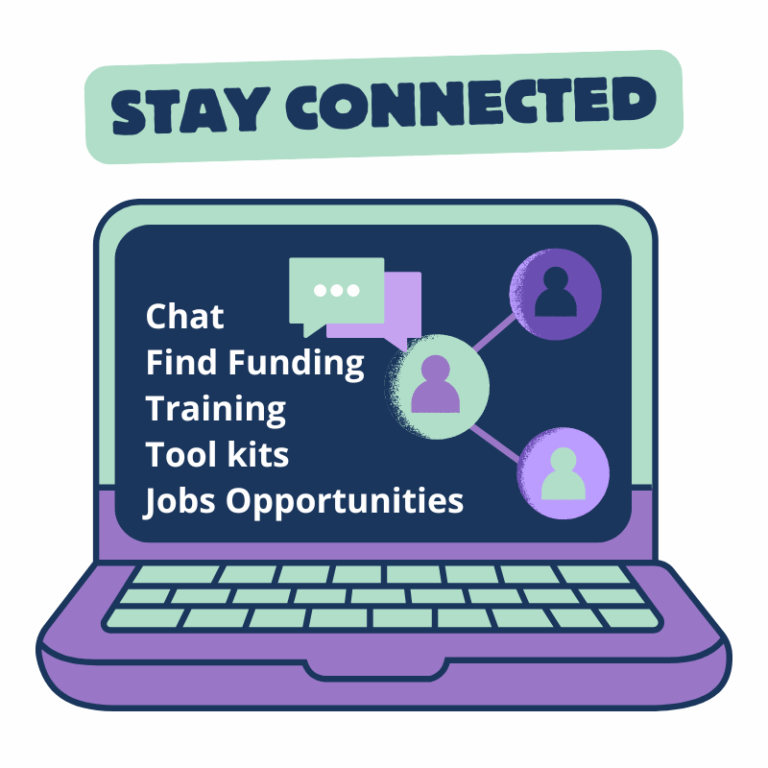
Regional planning meetings naturally sparked connections and planning members requested to grow these connections between monthly meetings. The End the Syndemic Tennessee Virtual Networking Platform was then launched. This fully interactive space allows individual and group chats, announcements, events, and resources to be shared with ease.
Midway through the regional planning meeting process, a demographic survey was launched to take stock of who was still engaged to ensure priority populations and people with lived/living experience were well represented. Data from this survey was used to increase focused recruitment efforts and identify priority groups for focus groups and in-depth interviews.
The End the Syndemic Tennessee Needs Assessment survey was developed to better understand needs, gaps, barriers, and facilitators related to HIV, STIs, substance use disorder, and viral hepatitis prevention and care services from consumer and provider perspectives. In-person and phone surveying was offered to reach those without internet capabilties.

Towards the end of the regional planning meetings, emerging strategies were presented back to the planning groups for additional feedback. Over the course of 2 years, 80 regional planning meetings were held across all ETS regions. Notably, ETS was the most extensive community-informed planning process to address the HIV, STI, substance use disorder, and viral hepatitis syndemic.
To glean more nuanced insights from ETS priority populations that were underrepresented in the ETS regional planning groups, focus groups and in-depth interviews were conducted in collaboration partnerships across the state. Prioritized groups were identified through data from the demographic survey conducted midway through the ETS planning process.
Information learned from regional planning groups, the needs assessment survey, focus groups, in-depth interviews, internal workgroup meetings, local Ending the HIV Epidemic Plans, previous integrated HIV plans, federal plans, and federal planning guidance all informed the drafting of the End the Syndemic Tennessee Strategic Plan.
Guiding principles are fundamental values and ethical standards that guide decision-making, implementation, evaluation, and all other actions taken as part of End the Syndemic Tennessee.
The following guiding principles were develop in partnership with community and are at the core of End the Syndemic Tennessee.
Health
Justice
Health justice addresses short-term differences in need (health equity) while also working towards long-term sustainable and equal access to health and wellness resources, which requires addressing social and structural barriers to health.
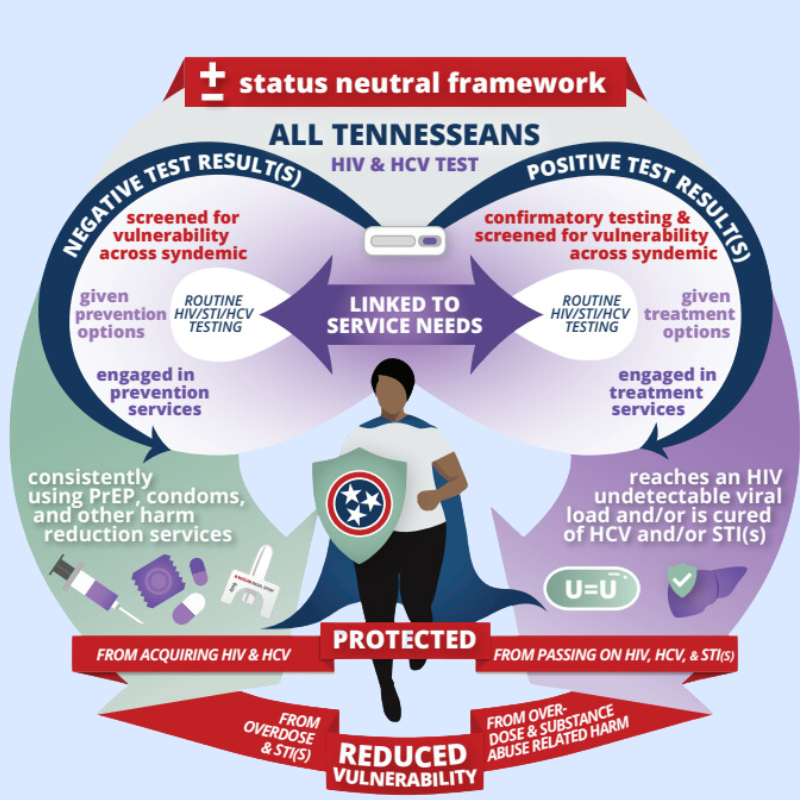
Status-Neutral
Care
Status Neutrality, is a whole person approach characterized by delivering high-quality and comprehensive services regardless of whether a person diagnosed with a condition or not. Treatment is prevention. Prevention is treatment.
Evidence-Based
Programs
Evidence-based approaches incorporate quantitative (numbers) and qualitative (words/feelings) data into decision making.
This is supported by quality data collection that is shared with community in accessible and acceptable ways.
Health
Autonomy
Health autonomy is the principle that people have the right to make informed decisions about their own body, health, and wellbeing including the choice to engage or not engage in services. Health autonomy centers empowerment over control.
Identify Tennesseans in need of prevention and treatment services across the syndemic
Increase access to prevention services across the syndemic in Tennessee
Increase engagement in treatment services across the syndemic in Tennessee
Build resilient communities through coordinated care and by reducing social and structural barriers to health and wellbeing
Please allow 2-3 business days for a response.
Syndemic Coordination Team Syndemic.Coordination@tn.gov
1.https://www.cdc.gov/std/dstdp/2018-SR-DCL_FINAL.pdf
2.https://www.cdc.gov/std/stats18/default.htm
3.https://www.cdc.gov/std/health-disparities/stds-women-042011.pdf
4.https://www.cdc.gov/hepatitis/statistics/2017surveillance/index.htm
5.https://www.cdc.gov/media/releases/2016/p0504-hepc-mortality.html
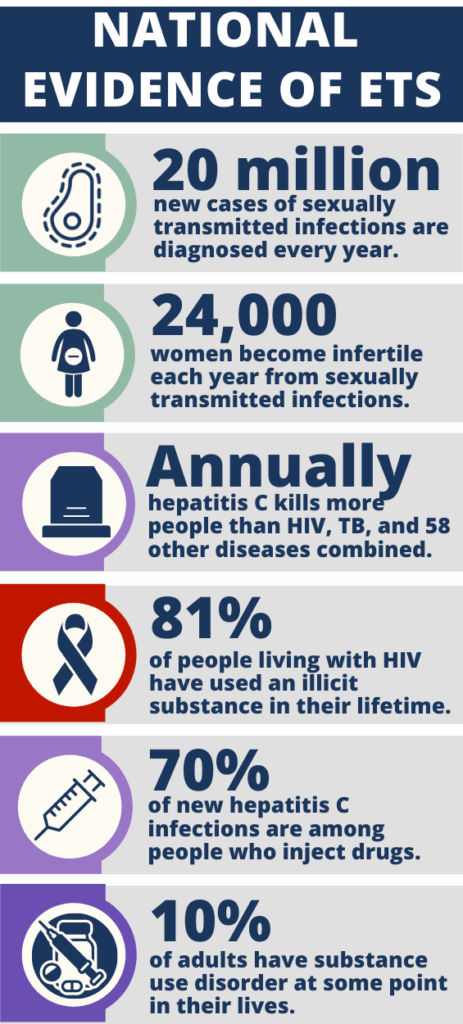
Sexually transmitted infections (STIs) reached an all-time high in 2018, with 20 million new cases each year. (1). Between 2014 and 2018, chlamydia cases have increased by 19%, gonorrhea by 63%, primary and secondary syphilis by 71%, and congenital syphilis by 185% (2). Annually, 24,000 women become infertile as a result of untreated STIs (3). Viral hepatitis has also seen notable shifts in the number of annual cases. With large hepatitis A outbreaks sweeping the nation, the hepatitis A rate of infection nearly doubled between 2013 and 2017, from 0.6 to 1.0 cases per 100,000 people (4). Despite being vaccine preventable and a routine childhood vaccination, new hepatitis B infections continue to persist. Cases of hepatitis C cases have been trending upward nationwide since 2013 (4). Hepatitis C infections that are left untreated can be deadly. Since 2013, hepatitis C has killed more Americans annually than HIV, tuberculosis, and 58 other reportable infectious diseases combined (5).
According to National Institutes of health, approximately 10% of U.S. adults have drug disorder at some point in their lives and 75% report never receiving any form of treatment (6). Substance use is common among people living with HIV (PLWH) with nearly 50% of PLWH reporting current or past histories of drug or alcohol disorders (7). Nationally, up to 70% of new hepatitis C infections are among people who inject drugs (8). Men who have sex with other men, transgender persons, young adults, and some racial and ethnic groups, including Black and Latinx, are disproportionately affected by many of these health conditions.
The data dashboards listed below are interactive tools that contain the most up-to-date state, regional, and county level data on drug overdoses, mental health and substance abuse services, and HIV trends. The HIV and Hepatitis C Virus (HCV) Outbreak Vulnerability Dashboard contains profiles for each county in Tennessee about their vulnerability to an HIV or HCV rapid transmission event due to injection drug use.
According to National Institutes of health, approximately 10% of U.S. adults have drug disorder at some point in their lives and 75% report never receiving any form of treatment (6). Substance use is common among people living with HIV (PLWH) with nearly 50% of PLWH reporting current or past histories of drug or alcohol disorders (7). Nationally, up to 70% of new hepatitis C infections are among people who inject drugs (8). Men who have sex with other men, transgender persons, young adults, and some racial and ethnic groups, including Black and Latinx, are disproportionately affected by many of these health conditions.
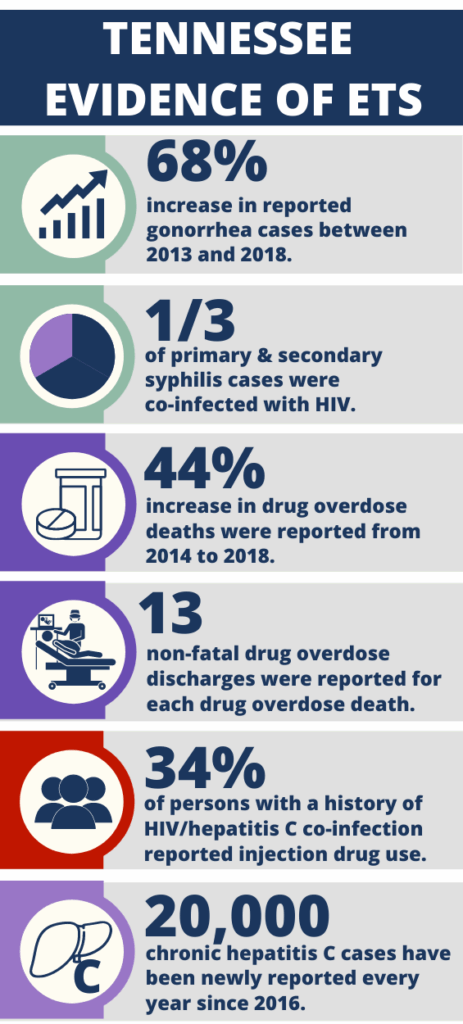
Despite national decreases, Tennessee observed a 44% increase in drug overdose deaths from 2014 to 2018. For every life lost to drug overdose in 2018, 13 people were discharged from Tennessee hospitals for non-fatal drug overdoses. As substance use continues to increase, so does the concern of a rapid transmission event of HIV and hepatitis C due to Injection drug use. Approximately 34% of people living with HIV with a history of hepatitis C infection, report injection drug use. Since 2016, there have been 20,000 newly reported cases of chronic hepatitis C each year.
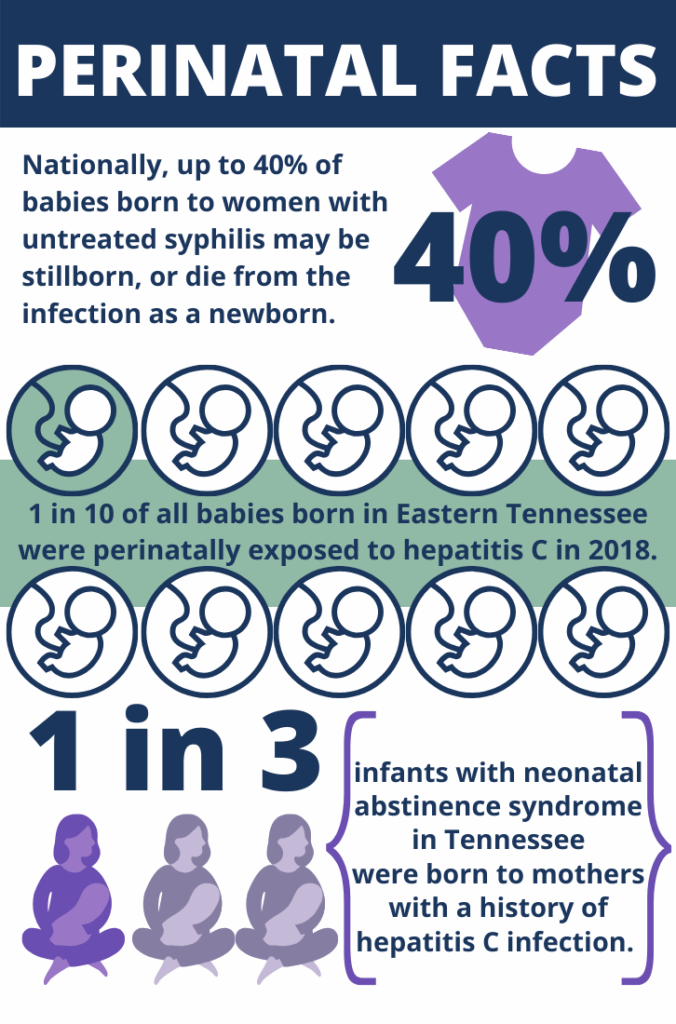
Nationally, 40% of babies born to women with untreated syphilis will be stillborn or die from the infection as a newborn and over the last few years Tennessee has seen a notable increase in congential syphilis cases. As the distribution of hepatitis C cases continues to shift toward younger individuals, concerns about the impact of hepatitis C virus infection among reproductive-aged women and potential transmission of the virus to their infant(s) grows.In eastern Tennesee, approximately 10% of all babies born were exposed perinatally to hepatitis C in 2018. The crossover between hepatitis C and substance use emerges clearly in the number of infants born with neonatal abstience syndrome (NAS). Approximately one third of infants with NAS were born to mothers with a history of hepatitis C infection. As we move to end the syndemic in Tennesee, addressing the unqiue needs pregnant persons and their infants will be critical to ending the sydnemic for future generations